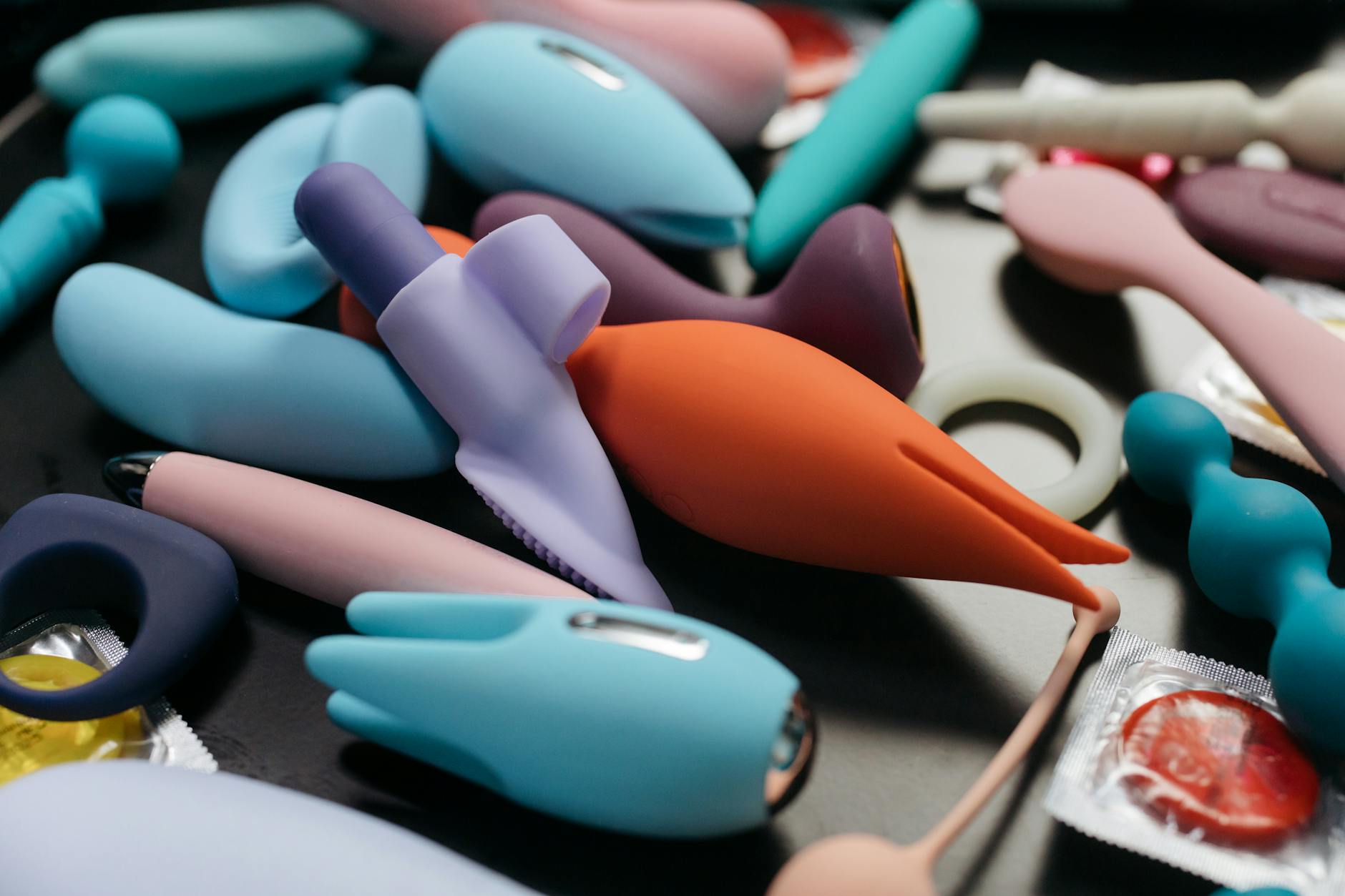
The speed trap most people fall into
Honestly? The biggest barrier to better pleasure isn't technique or equipment. It's rhythm. Most people treat arousal like a sprint. Get there, get it done, move on. The body cooperates for a while, but then sensation plateaus or stops altogether. You end up chasing something that keeps moving away.
Here's what I see in my practice all the time. Someone buys a lemon vibrator, a clitoral vibrator like the Lem, and uses it at full intensity for two minutes expecting fireworks. Nothing. Or something numb and one-note. They think the toy is broken. It's not. The approach is.
Why slowing down actually feels better
Your nervous system has two settings that matter for pleasure: sympathetic (alert, speedy, goal-focused) and parasympathetic (calm, open, sensation-focused). Most of us live in sympathetic mode all day. Sex at full throttle just extends that. Your body's defensive systems stay half-engaged even during pleasure.
When you slow down, something shifts. Parasympathetic activation deepens. Blood flow increases in a more even way instead of a quick spike-and-crash. Nerve sensitivity gets sharper instead of overwhelmed. The clitoral tissue actually has time to respond fully to each sensation.
I usually describe it like this. Fast vibration is a shout. Slow, varied stimulation is a conversation. One gets your attention. The other gets your participation.
What lemon clitoral vibrators do well for this
A lot of toys are built for speed. Intensity and patterns that go from 50 to 100 in two clicks. Lemon adult toys, by design, work differently. The Lem starts gentle. The suction mechanism (not just vibration) creates a building sensation that your body can actually follow instead of React to.
Why does this matter for slowing down? Because you're not fighting the toy. The lower starting intensities on the Lem give you permission to linger. You can spend five, ten, fifteen minutes on pattern one or two without it feeling boring or weak. Your sensations can layer and deepen instead of peaking and flattening.
The suction sensation also changes how your brain processes pleasure. It's not a rhythmic buzz that your nerve endings tune out after a few minutes. It's a pulling sensation that feels fresh and novel even at lower speeds. That novelty actually keeps your parasympathetic system engaged longer.
The practical pacing framework
Here's how to actually do this. Timing matters less than sequence.
Start with nothing. Seriously. Five minutes of touch with your hand or your partner's hand. No toy yet. This isn't skipping to the main event. This is the main event. Your nervous system is getting permission to activate.
Introduce the toy at the lowest setting. With a lemon clitoral vibrator like the Lem, that's pattern one. Spend at least three to five minutes here. You're not trying to build to something. You're exploring what this sensation feels like at this intensity. Notice texture, pressure, rhythm.
Stay for a while. The urge to escalate will kick in around minute three or four. Resist it. This is where most people lose the thread. They assume nothing's happening because they're not feeling the rush of a building climax. Something is happening. Your body is learning that pleasure can be steady, not just peaked.
Move up one pattern at a time, resting between. Not during. Between. If you're on pattern one for five minutes, move to pattern two. Spend two to three minutes there. Your body will register the change more clearly. Then pause for thirty seconds to a minute. This rest actually intensifies sensation when you resume.
Add variation, not intensity. Once you're comfortable, don't crank the power. Change where the toy touches, how much pressure, the angle. Position matters way more than speed. Small shifts in how you hold the Lem create entirely new sensations.
Why this works for partnered play
If you're with a partner, slowing down does something almost radical. It gives you both permission to actually be present instead of performing.
Partners often use a lemon vibrator to speed things up (get their partner to climax faster, get back to whatever comes next). That removes all the intimacy. Slowing down reframes the toy. It becomes a way to explore together, to play with sensation in a more experimental way.
Here's the shift. Instead of "use the toy, get the result," it becomes "we're going to spend the next twenty minutes finding out what feels good right now." That changes everything psychologically. Pressure drops. Connection goes up. And paradoxically, intensity often follows.
If your partner is new to using a lemon clitoral vibrator with you, start together at the same low intensity. Let them feel what you're experiencing. Talk about it. That narration matters. "This feels stronger here" or "I like the pattern better than the suction right now." That conversation is intimacy. It also gives your brain permission to stay open instead of focusing on outcomes.
The recovery arc (why rest is part of the design)
One thing people miss about extending pleasure is the role of recovery time. You don't need to climax faster to have better sex. You need better valleys between peaks.
With a lemon sexual toy, when you pause between patterns, you're not losing progress. You're creating contrast. The sensation when you resume feels fresh because your nerve endings have had a moment to reset. This is why older or longer sessions with the Lem often feel more intense than quick ones, even at the same power level.
If you're aiming for multiple peaks instead of one big one, this becomes crucial. First climax at a comfortable pace. Rest (actually rest, not just "keep going slower"). Then begin again from pattern one. Your body will respond faster the second time, but the sensation will feel different. You're literally building a more complex experience.
Common pacing mistakes and how to fix them
Thinking you need patterns instead of lingering on one. Wrong move. The Lem's multiple patterns are options, not requirements. Some of the best sessions I've heard about from clients were thirty minutes on a single pattern with only angle and pressure changing. The patterns exist for variety, not for speed.
Assuming slow means weak. Nope. Try this. Set your lemon vibrator to pattern one. Hold it in place for five minutes. Then move to pattern two for one minute. The contrast will shock you. Pattern one is not weak. Pattern two just feels loud after you've been in a quiet space.
Switching toys or sensations too often. If you're trying to slow down, stay with one approach for at least ten minutes before changing. Your nervous system needs stability to build deeper sensation. Constant novelty just keeps you in a shallow, alert state.
Forgetting to breathe. Honest to god, most people hold their breath during pleasure. Then their nervous system stays sympathetic (fight-or-flight). Slow breathing, especially extended exhales, signals safety to your body. That's the opposite of the speed trap.
When slowing down reveals something new
This is what I find remarkable. People who commit to slowing down, who give themselves fifteen or twenty minutes with a lemon clitoral vibrator at lower intensities, often report sensations they've never experienced. Not stronger orgasms necessarily (though sometimes those too). Different textures. Pleasure in unexpected areas. Multiple smaller peaks that feel different from one big rush.
That's your nervous system rewiring. You're teaching it that pleasure doesn't have to be loud and fast. That opens up entire new ranges of sensation.
For people recovering from sexual trauma, this is often the first time pleasure feels safe instead of frantic. For people in long-term relationships, it's often the first time solo or partnered pleasure feels like play instead of work. For people whose sensation has shifted over time, slow builds often reconnect them to pleasure in a gentler, more sustainable way.
The psychology of permission
Honestly, slowing down is as much about permission as technique. Permission to take twenty minutes for yourself. Permission to not chase a specific outcome. Permission to stop when something doesn't feel good and try something else without that meaning failure.
When you use a lemon vibrator intentionally, with actual pacing, something shifts. You're not trying to extract pleasure from your body as quickly as possible. You're building it, exploring it, understanding it. That's a completely different experience.
Try this framework once. Actually commit to twenty to thirty minutes with one lemon sexual toy at lower intensities, with real pauses, with breathing. Notice what happens. Most people say the same thing after. "I had no idea it could feel like that." That's not the toy. That's you, finally slow enough to actually feel.
People also ask
How long does it take to feel the benefits of slowing down with a lemon vibrator? Most people notice a difference in the first session if they genuinely commit to twenty minutes or more at lower intensities. The first time typically feels experimental or strange because you're not used to this rhythm. By the second or third time, your body understands the pacing and sensations deepen. Give it three sessions before deciding if it's for you.
Can you actually use a lemon clitoral vibrator for an extended session without it getting uncomfortable? Yes, but positioning matters. The Lem's design means you can shift angles slightly to vary sensation without switching toys entirely. If you feel numbness appearing (usually after twenty to thirty minutes), pause for a few minutes, move to a different area, or lower the intensity. Your body will signal when it needs a break.
Does slowing down work if you have numbing or desensitization? Often better than speeding up. Many people with reduced sensation find that slow, varied stimulation over time actually reconnects them to feeling better than fast, high-intensity play. This works best alongside other approaches, but pacing is usually the forgotten piece. See your doctor if numbness is new or painful, but many people find slowing down helps with clitoral desensitization.
What if my partner thinks slow means boring? That's a communication gap, not a technique gap. Spend ten minutes together with a lemon sexual toy at a slow pace and ask what they notice. Most partners shift their thinking once they feel the difference. Intensity isn't the same as arousal. A slow build often creates more psychological engagement, which partners actually find hotter once they try it.
Can you combine slow pacing with partnered penetration? Absolutely. Use the Lem at a lower intensity while your partner moves slowly (or stays still). The external stimulation plus deep connection often creates a completely different sensation than either alone. The key is keeping the pacing aligned. If one person is rushing and the other is slow, the nervous system conflict cancels the benefits.
Is there a "wrong" amount of time to spend on one pattern or intensity? Not really. Some sessions five minutes per intensity is enough. Other times twenty is necessary. The rule is simple. Stay until you feel genuine curiosity about moving to something else, not just impatience. Your body will tell you. If your mind is bored but your body is still exploring, keep going.