
The thing nobody admits
Introducing a lemon vibrator into partnered sex sounds simple on paper. In reality, it's a conversation that makes a lot of couples freeze. You're worried they'll feel replaced. They're worried you're not satisfied. Both of you are silently panicked that mentioning it will start a fight or trigger an awkward evening.
Here's what I've learned after twenty years of working with couples: the vibrator isn't the problem. The shame and secrecy around it is.
Why the pressure exists (and why it's not your fault)
Partners often interpret a vibrator as a referendum on their skills or their desirability. This is almost never what's actually happening. When someone wants a clitoral vibrator during partnered sex, they're usually saying one of three things: "My body responds differently than it used to," or "I need a specific kind of stimulation to finish," or "I want to enjoy this more together."
None of those statements are criticism. All of them are invitations.
The pressure you feel isn't coming from nowhere, though. We've been fed the myth that "good sex" requires zero tools, zero conversation, and instant mutual orgasm. It doesn't. Real partnered pleasure is collaborative. It requires talking, adjusting, and yes, sometimes using a lemon clitoral vibrator.
The conversation framework that actually works
Timing matters. Don't introduce this idea during sex, and don't ambush them with a toy already in hand. Instead, pick a moment when you're both relaxed and clothed.
Start here: "I've been thinking about how we could both enjoy sex more. There's something I want to try, and I wanted to talk about it first."
Then be specific. "I've read about clitoral vibrators, and I think using one might help me feel more pleasure when we're together." Notice what you didn't say: "You don't turn me on enough" or "I'm not happy." You're focusing on addition, not subtraction.
Their response might be curiosity. It might be defensiveness. Either way, you're prepared with the truth: "This isn't about you or about what you're doing. It's about how my body works, and I'd love for us to explore this together."
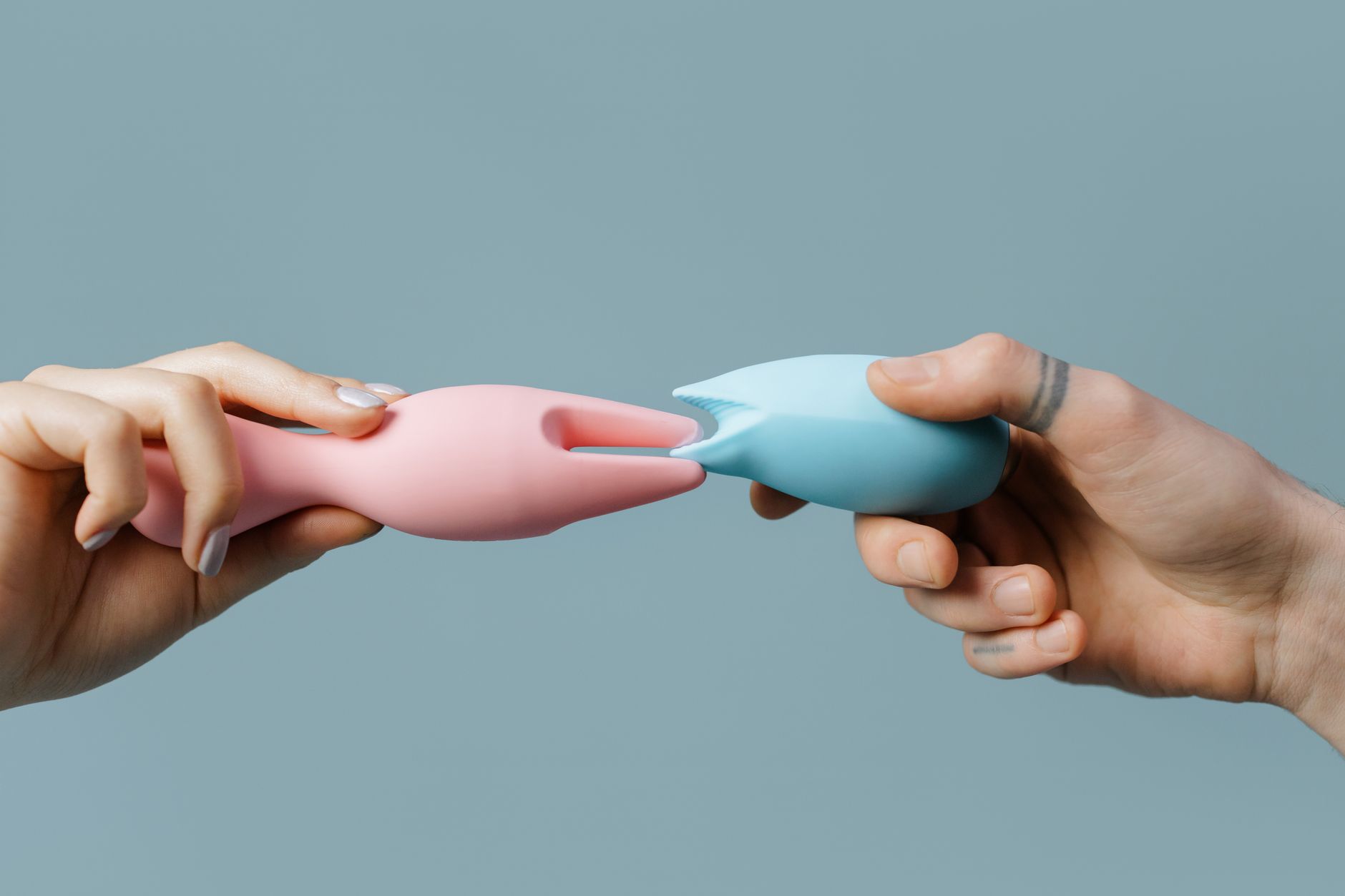
Photo by cottonbro studio on Pexels
How to use a lemon vibrator in partnered sex without it feeling clinical
Once you've had the talk, the actual integration is less complicated than people think.
1. Start with foreplay, not the main event. Use the vibrator during kissing, touching, or manual stimulation. This frames it as part of the experience, not a replacement for it. A clitoral vibrator like the Lem works particularly well here because it's intuitive and creates that suction sensation without requiring the kind of directional precision that can feel mechanical.
2. Let them participate. Your partner can hold the vibrator. They can turn it on and off. They can decide when and where the stimulation happens. This transforms the vibrator from an object that makes them feel sidelined into a shared tool that deepens connection. You're not pulling away from them; you're bringing them into a more attuned version of what you both want.
3. Communicate in the moment, simply. "That feels good." "A little higher." "Slower." "Keep doing that." Your partner isn't a mind reader, and neither are you. This kind of real-time feedback is intimate. It's not a performance evaluation; it's collaboration.
4. Build into penetration if you want. Some couples like using a lemon clitoral vibrator during partnered penetration. This requires a little coordination, but it's far from impossible. The vibrator stays in contact with the clitoris while your partner enters from a slightly different angle than usual. The suction mechanism in vibrators like the Lem creates consistent stimulation without the friction issues that can arise with direct vibration during penetration.
The emotional work underneath
Using a clitoral vibrator with a partner isn't really about the vibrator. It's about vulnerability, trust, and being willing to ask for what you need.
Some partners will surprise you with enthusiasm. They might say, "I didn't know this could feel this good for you," or "I'm glad you told me." Others will need time. They might feel initially insecure, and that's normal. What matters is that they don't weaponize that insecurity against you. If your partner is consistently resistant or uses guilt to keep you from exploring your own pleasure, that's a larger relationship issue that a vibrator won't fix.
For most couples, the vibrator actually becomes a turning point. It forces a conversation that should have happened already: "How do we make sure you're enjoying this?" From there, everything gets easier. You're not operating on assumptions anymore. You're operating on actual information about what each of you needs.
When low-pressure partnered sex looks different for each person
One partner might want to orgasm quickly and move on. The other might need twenty minutes of buildup. One might love penetration; the other primarily clitoral stimulation. One might want eye contact the whole time; the other might need to close their eyes to concentrate.
None of these are incompatibilities. They're just information. A lemon vibrator gives you the tool to meet each other's bodies where they actually are, instead of where you thought they should be.
This is what low-pressure sex looks like: "Here's what I need. Here's what you need. Let's figure out how both of those things happen in the same encounter." It's not spontaneous in the Hollywood sense. It's spontaneous in the way that actually matters: you're responding to real desire and real bodies, not a script.
The biggest blocker (and how to move past it)
The reason most couples don't introduce toys during partnered sex isn't logistics. It's shame. Specifically, the shame of admitting that "normal" sex isn't quite cutting it, and the fear that naming that will hurt your partner or damage the relationship.
Here's what I tell people in my practice: the shame is the problem, not the vibrator. If you're in a relationship where you can't ask for what you need, you have a bigger issue than whether to buy a toy.
If you're in a relationship where you can ask, and your partner is willing to listen and adapt, then using a lemon clitoral vibrator together is just the next logical step. It's not weakness. It's not cheating. It's not a reflection on your partner's adequacy.
It's just better information, and better tools to use that information.
FAQ
Will using a vibrator make my partner feel inadequate?
Not if you frame it correctly. The key is shifting from "You're not enough" to "Together, with this tool, we can both feel more pleasure." Your partner might have an initial insecure reaction, and that's fair. Give them time to process, answer questions honestly, and show them through your actions that this is about collaboration, not replacement. Most partners come around quickly once they see how much more you enjoy sex when you're using a clitoral vibrator together.
How do I know if my partner will be open to this?
You don't until you ask. But there are soft signals. Has your partner been willing to talk about sex in general? Have they shown curiosity about your pleasure? Do they seem defensive when you bring up anything related to attraction or desire? The conversation will tell you a lot. If they're defensive before you even mention a specific tool, that's a sign you might need to work on broader relationship communication first.
Can you use a lemon vibrator during penetration, or does it get in the way?
Yes, absolutely. The shape and size of vibrators like the Lem make them suitable for dual stimulation during partnered sex. You'll need slightly different positioning than you might be used to, and it takes a little experimentation, but it works. Some couples find it helps the receiving partner orgasm more reliably during penetration, which can reduce performance pressure for both of you.
What if my partner wants to control the vibrator and I don't like how they're using it?
Tell them. In the moment, or right after. "That angle doesn't feel as good" or "A little gentler, please." This kind of feedback is essential. If you're worried about hurting their feelings, remember: they want you to feel good. They'd rather know they're using it "wrong" than think they're doing something that doesn't work for you. The more specific and calm your feedback, the easier it is for them to hear.
Do lemon vibrators work better for partnered sex than other types?
Clitoral suction vibrators like the Lem tend to work well for couples because they create stimulation without the kind of aggressive vibration that can feel overwhelming or numbing during partnered sex. The suction mechanism also feels less mechanical to partners watching it happen. But the best vibrator is the one that feels good to your body and that you're both comfortable exploring together. Start with what appeals to you, and adjust from there.
What if I'm nervous about asking because we've never talked about sex this directly?
Then this is actually the conversation you both need. Couples who can discuss pleasure, preferences, and needs tend to have stronger relationships and better sex. Starting with a specific request (using a lemon clitoral vibrator) makes the conversation easier than starting from scratch. It's a concrete thing to talk about, which makes it less abstract and intimidating. Once you've had one honest conversation, the next one gets easier.
The real payoff
Most couples who introduce a vibrator into partnered sex report that it doesn't just improve that particular kind of sex. It changes the whole dynamic. Suddenly you're having conversations about desire and pleasure that you weren't having before. You're more attentive to what your partner actually needs, not what you assume they need. You feel safer asking for things. The performance anxiety drops.
Low-pressure partnered pleasure isn't about doing more or lasting longer or reaching some imaginary standard. It's about both of you showing up honestly, asking for what you need, and being willing to use whatever tools make that feel good. A lemon vibrator is just the starting point.
If you're ready to have this conversation but need support, reach out to us at Lem Vibrator. We've got guides, resources, and real advice for couples navigating exactly this.