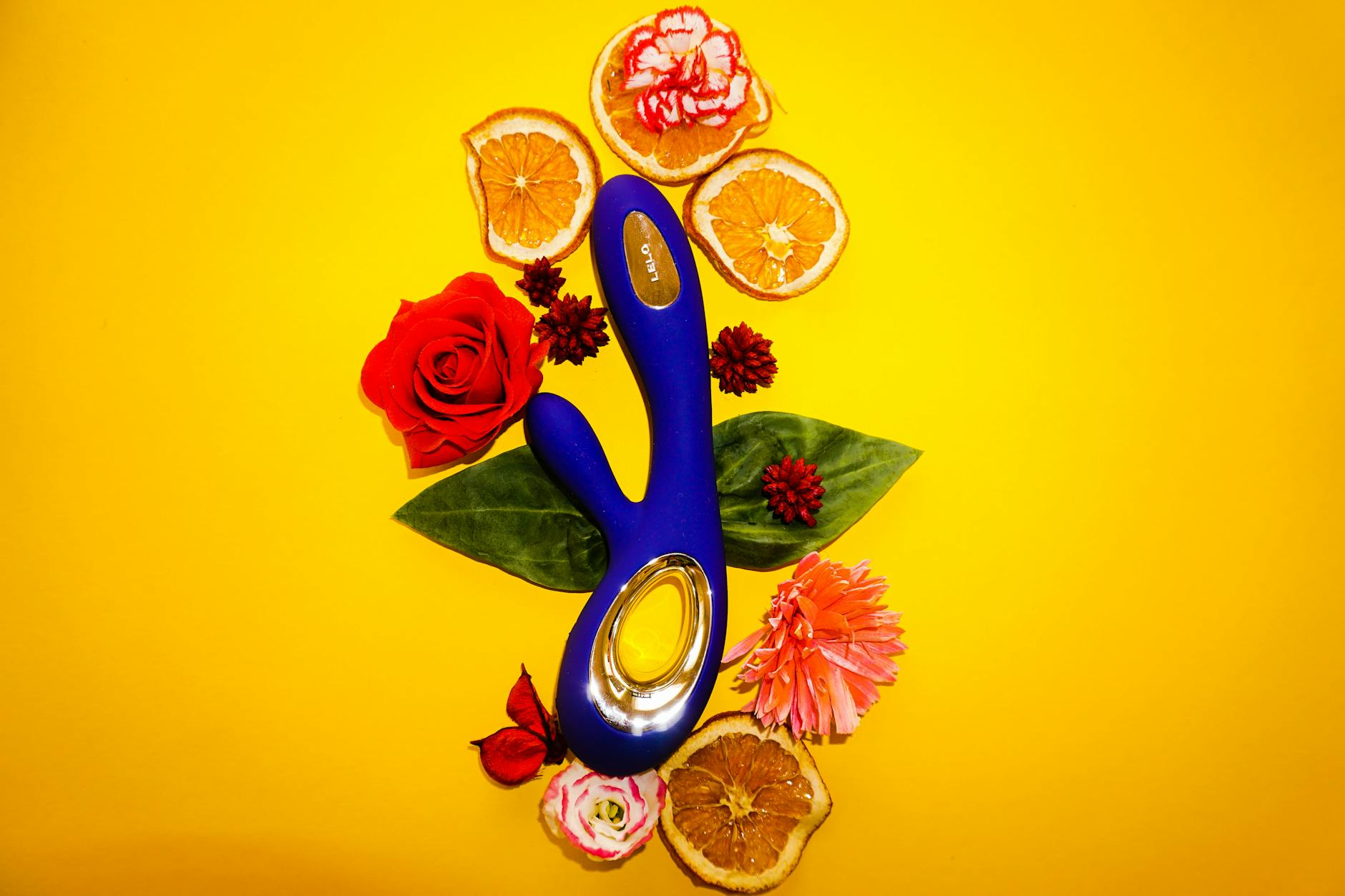
The intensity problem nobody mentions
You've heard the hype about lemon vibrators. You buy one. And then you press it against yourself and think, "This is way too much."
That's not a failure. That's actually the most common first contact with clitoral vibrators, and it means you need a different approach, not a different toy. The good news is that intensity isn't fixed. It's something you control completely.
Why standard vibrators feel overwhelming
Clitoral tissue is dense with nerve endings. We're talking about the most sensitive skin on your body. A vibrator that's "medium" intensity for someone used to firm partner touch might feel like someone's buzzing directly on a live wire for someone who's never used one, or who has heightened sensitivity.
Add to that: many clitoral vibrators are designed for people who've already acclimated to the sensation. Manufacturers assume a certain baseline of tolerance. Lemon vibrators, by contrast, use air-suction technology instead of direct vibration, which means the stimulation is dispersed and gentler by default. But even with a design that's inherently softer, you still need technique.
Intensity comes from three variables: proximity, pattern, and duration. Control any one of those, and you transform the entire experience.
Proximity: the distance game changes everything
The single biggest mistake people make is applying the vibrator directly to the clitoris, pressed hard, from the first second. That's like turning up the volume to maximum before you even know if you like the song.
Start with the Lem vibrator held about half an inch away from your body, not touching. Feel the pressure wave. This is the lightest possible sensation from the toy. At this distance, even the highest setting feels almost ambient.
Once that feels good (and it might take a minute or two for your body to adjust), you can move closer. A quarter inch. Then making contact but very gently, with the gentlest part of the toy's opening.
This isn't slow or precious. It's just smart. Your nervous system recognizes the sensation gradually instead of being shocked by it. By the time you're pressing it fully against your skin, you're already aroused and acclimated. The same intensity setting now feels right.
Pattern: not all vibrations are created equal
Lem clitoral vibrators offer multiple patterns, and they vary wildly in how intense they feel. Pattern 1 or 2 is never just "a lighter version of pattern 5." They're often completely different sensations.
Experiment with patterns first, on the lowest setting, at maximum distance. Find the one that feels most comfortable. That becomes your baseline. You can use it for as long as you want without intensity feeling like a wall you have to climb.
Many people discover they actually prefer a lower-numbered pattern permanently. It's not that you work your way up to "real" pleasure. A pattern that feels perfect for hours without discomfort is objectively better than one that feels amazing for five minutes and then painful.
Try layering: use a gentler pattern during arousal, then switch to something more intense once you're already engaged. The same pattern feels different depending on what's happening in your body.
Duration: building tolerance at your own pace
Intensity compounds over time. Five minutes of light stimulation feels different from twenty minutes. Your tissue becomes slightly desensitized, and your arousal deepens, which changes how the sensation lands.
If a certain intensity setting feels too strong right now, cut your session shorter. Seriously. Use the Lem vibrator for three minutes instead of fifteen. Stop when it still feels good, not when you've pushed through discomfort to reach orgasm. That's rewiring your pleasure response in the wrong direction.
Over several sessions, you'll notice that same setting now feels manageable for longer. Your nervous system adjusts, and your threshold naturally expands. This isn't a grind. You're not working toward something. You're just letting your body find its own speed.
Strategic layering: how to add sensation without adding harshness
Here's the technique that changes everything for people with sensitivity concerns.
Use the Lem vibrator through a barrier. A thin fabric layer, like a blanket, a t-shirt, or even your underwear, dampens the direct intensity while keeping the pleasure intact. This is not cheating. This is exactly how many people use lemon clitoral vibrators, permanently. You get the benefits of the toy with sensations that actually fit your nervous system.
You can also combine the Lem with manual touch. Hold the vibrator at low intensity while using your other hand for pressure, stroking, or just grounding contact. This distributes the sensation across your body instead of concentrating it in one place.
Some people use a broad-spectrum lubricant (water-based only, with silicone toys). The lubrication creates a slight buffer while also conducting sensation more gradually. Your sensitivity might feel completely different depending on whether you're using lube or not.
The psychological part, which actually matters
Tension changes intensity. If you're nervous about what a vibrator will feel like, your muscles tighten, your nervous system goes into alert mode, and everything feels sharper and more intense.
Before you use the lemon vibrator, do ten minutes of whatever gets your mind off the "Will this hurt?" track. A bath. A favorite song. Time with a partner. Breathing. The goal is to arrive aroused and curious, not braced.
Also: you're allowed to pause. You're allowed to stop. You're allowed to come back to it tomorrow. There's zero pressure to make the intensity work right now. Half the people reading this will acclimate in two sessions. The other half will find that a lighter approach is just their preference, and that's completely fine.
When to consider different gear
After trying all of these techniques with your current lemon vibrator, if intense stimulation still feels sharp or painful, it might be a sign of something physical worth investigating.
Genitourinary syndrome (a real condition, especially common after hormonal shifts) can make tissue feel more sensitive to vibration. A conversation with a gynecologist trained in this area can make a genuine difference. There are very treatable options.
You might also just find that you prefer a broader-based toy over a pinpoint vibrator. A wand vibrator offers more dispersed stimulation. Some people find lemon clitoral vibrators perfect; others prefer something that spreads the sensation wider. Neither is wrong.
The real payoff of taking your time
Honestly though, the people who get the most out of lemon vibrators are the ones who start slow. They build a relationship with the sensation instead of trying to force immediate pleasure. After a few weeks, they know exactly what they want, how much, and when. The toy becomes intuitive.
Your pleasure matters. That means it deserves an approach that actually works for your body, not someone else's baseline. Intensity control isn't a workaround. It's the whole point.
FAQs on managing vibrator intensity
Why do clitoral vibrators feel so intense compared to partnered touch?
Clitoral vibrators produce a rapid, consistent frequency that your body interprets as "maximum signal" from the start. Partnered touch varies in pressure, rhythm, and warmth. Your nervous system reads it as more gradual. Both can feel incredible once your body acclimates to the vibration pattern. The intensity of a vibrator isn't objectively stronger, just different, and it takes time to recalibrate.
Can I hurt myself by using a vibrator on the highest setting?
No permanent damage, but temporary soreness is possible. Tissue can become slightly irritated or desensitized if you use very high intensity for a long time without breaks. If you feel rawness or tenderness after, it's a signal to reduce intensity next time or shorten your session. Build up gradually rather than jumping straight to maximum.
How long does it take to adjust to vibrator intensity?
Most people notice a shift in what feels comfortable within two to five sessions. By week two, the sensation that felt shocking on day one might feel perfectly manageable. But this varies wildly. Some people adjust in one session. Others find that softer stimulation is just their preference permanently, and that's equally valid.
Is it normal to need the vibrator on a lower pattern permanently?
Completely normal. About a third of people who use clitoral vibrators prefer softer patterns or multiple techniques combined. You're not broken or slow to acclimate. You're just learning what actually works for your nervous system. Stick with it.
Should I use lubricant with my lemon vibrator to reduce intensity?
Yes, if that helps. Water-based lubricant can slightly buffer the sensation while adding a sensory layer. It also makes the toy glide more smoothly, which some people find less jarring. Experiment. There's no single right way to use a lemon clitoral vibrator.
What's the difference between numbness and just needing to build arousal?
Numbness usually means zero sensation after 10-15 minutes, even at a setting that felt strong initially. That signals either overuse of that intensity level, or potentially something physical worth checking out with a healthcare provider. Building arousal is different. Early in a session, sensation feels muted. As you get more turned on, the same intensity feels richer. That's normal. Give yourself 15 minutes to warm up, and reassess.