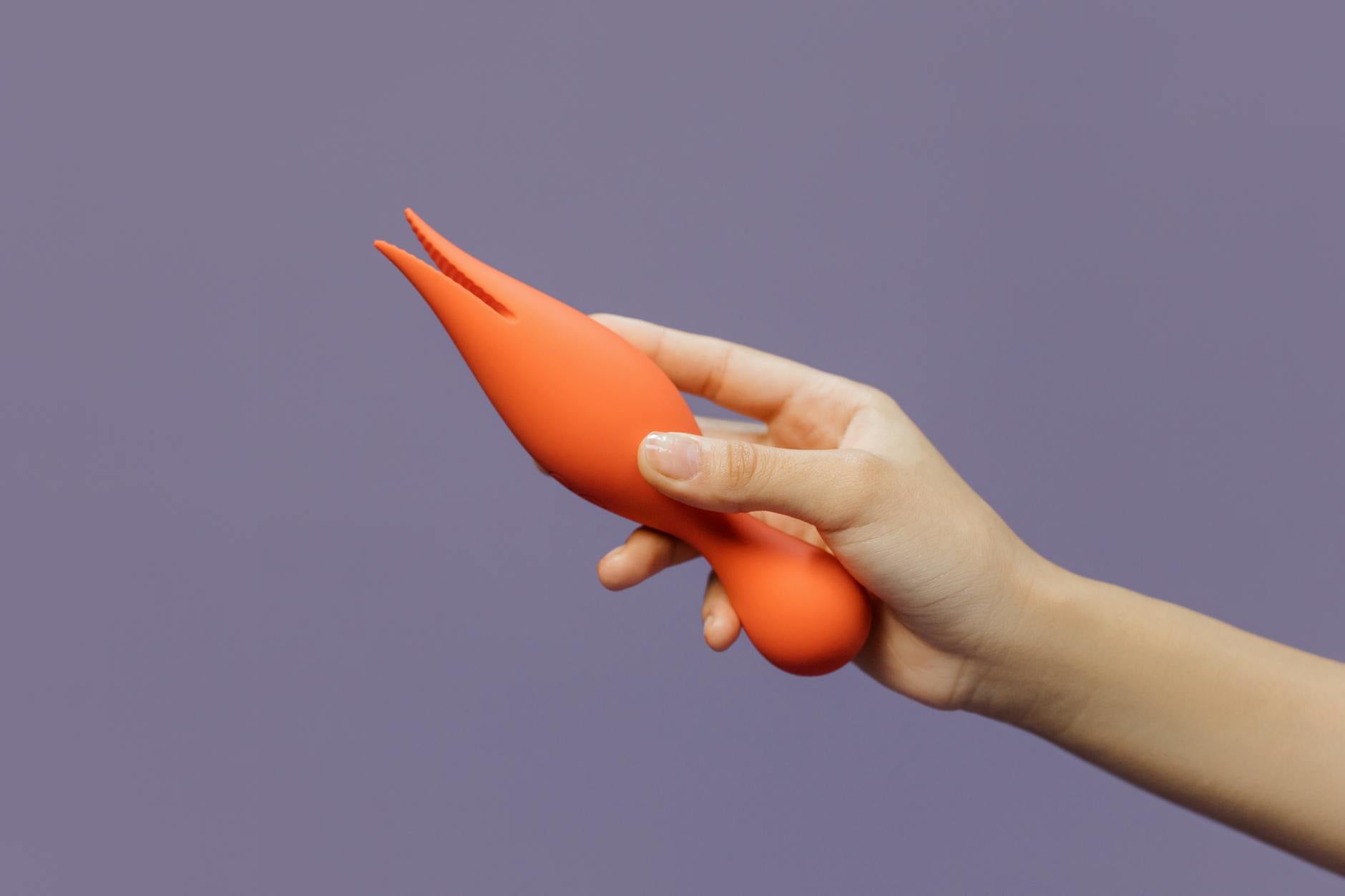
Here's the thing about sensitive vulvas and lemon vibrators
Sensitivity isn't a problem to solve. It's your nervous system doing exactly what it's supposed to do. The trick is matching your tool to your actual physiology instead of forcing yourself to tolerate something that feels wrong.
Most vulvas are sensitive. We're taught to act like we're not. That gap between what's marketed as "standard" pleasure and what your body actually wants is where people get stuck.
Why sensitivity changes how you use lemon vibrators
The clitoris has around 8,000 nerve endings concentrated in a space the size of a pea. For some people, direct stimulation from traditional vibration feels sharp or overwhelming. Others find that intensity painful after a few minutes. This isn't weakness. This is specificity.
Lemon vibrators, with their suction-based design, work differently than straight vibration. Instead of buzzing against tissue, they create gentle compression and release. This tends to feel less intense and more controlled, which is why people with sensitive vulvas often find them easier to start with.
But even within lemon vibrators, there are variables: pattern complexity, intensity levels, the size of the opening, and how the air-pulse cycles. Getting these right transforms the experience from uncomfortable to genuinely pleasurable.
Pattern matters more than you think
The biggest mistake I see is jumping straight to the strongest setting. On most lemon vibrators, settings 1 through 3 are where the real magic lives for sensitive bodies. These patterns tend to be simpler, slower, and less chaotic.
Pattern 1 is usually a basic pulse. Pattern 2 might add slight variation. Pattern 3 begins to get complex. If you're sensitive, commit to spending at least five sessions exploring patterns 1 and 2 before moving up. Your nervous system needs time to recognize the sensation as pleasure rather than novelty.
The size of the opening also affects how much stimulation reaches your body. Smaller openings concentrate sensation. If you're newly exploring clitoral toys, a slightly smaller cup can feel more manageable than a wide one.
Intensity ramps matter more than max power
When manufacturers boast about "10 intensity levels," most sensitive people use three of them. You don't need the tenth. What you actually need is smooth progression between levels.
If you jump from level 2 to level 4 and suddenly feel shocked by the increase, that's a ramp design problem, not a you problem. Some lemon vibrators have aggressive jumps between settings. Others ladder up gently. Read reviews from people describing their sensitivity specifically, not just "this is amazing" testimonials from people who might have entirely different nerve density.
The best lemon clitoral vibrators for sensitive bodies build intensity gradually and give you access to lower patterns that feel sustainable for 15 to 20 minutes without fatigue.
Lubrication is your secret weapon
This is not optional. Even if you're fully aroused and producing natural lubrication, adding a water-based lube changes everything for sensitive vulvas. Friction against tissue, even slight friction, can shift the experience from "that's good" to "I need to stop."
Lube creates a smoother seal and reduces microtears that contribute to sensitivity escalating mid-session. It also lets you move the toy around without losing the suction engagement, which opens up different angles and sensations.
Keep your lube beside you. Reapply every few minutes. If you're sensitive, treating lube as optional is like trying to give yourself a massage without oil. Technically possible, practically uncomfortable.
Warm-up and pacing make the difference
Most people with sensitive vulvas need longer warm-up time than the 2 to 3 minutes typical in mainstream advice. Budget 10 to 15 minutes of non-genital touch first. That means breasts, thighs, stomach, neck. Your entire body has erotic potential, and your clitoris responds better when the rest of your nervous system is already engaged.
Once you move to the vulva, start with the toy on pattern 1 at the lowest intensity. Spend two or three minutes just sitting with that sensation. Let your body recognize it as safe. Then, and only then, begin subtle movement or pattern exploration.
Rushing through warm-up is the fastest way to activate protective tension in sensitive bodies. Slowing down is the fastest way to unlock genuine pleasure.
Material and hygiene affect your skin
Sensitive vulvas often correlate with sensitive skin generally. Medical-grade silicone matters. So does thorough cleaning before and after use.
Bacteria buildup on the toy's surface can trigger irritation or infection, which then makes your vulva more sensitive to future stimulation. This creates a cycle where it feels like the toy is the problem when actually it's contamination.
Clean with warm water and unscented soap. If you're particularly prone to yeast infections or bacterial overgrowth, rinse with plain water only and air-dry completely before storage. Keep the toy in a breathable bag, not sealed in plastic.
When to seek support
If you've given yourself three to five sessions with lower patterns and extended warm-up, and the sensation still feels painful rather than intense, something else might be happening. Pelvic floor tension, hormonal factors, or underlying inflammation can all shift how sensitive feels.
This is worth discussing with a gynecologist or pelvic floor physical therapist. A good practitioner can rule out treatable conditions that are amplifying sensitivity and offer techniques to help you relax pelvic floor muscles that might be guarding.
Sensitivity isn't permanent. It changes with stress, cycle phase, sleep, and relationship dynamics. If it shifts suddenly, that's information worth investigating rather than just working around.
The best lemon vibrators tend to have these features
When you're shopping, look for toys that offer multiple low-intensity patterns, a gradual ramp between settings, and smaller to medium-sized openings. Reviews from people describing sensitivity specifically beat generic five-star ratings.
Many of Hello Nancy's most popular lemon vibrators are chosen specifically because they perform well at lower intensities instead of forcing you to choose between uncomfortable and too-mild. The approach is to help your nervous system gradually recognize pleasure, not to overcome sensitivity with sheer power.
Honestly, sensitive is an asset
Your sensitivity means your body is responsive. It means you have clear feedback about what feels good and what doesn't. In a culture that pushes people to ignore their nervous systems and "just relax," that clarity is rare.
Choosing a lemon vibrator that works with your sensitivity instead of against it isn't settling. It's honoring what your body is actually telling you. Pleasure built on that foundation tends to be more sustainable and more genuinely satisfying than pleasure built on tolerating discomfort.
People also ask
Can I use a regular vibrator if I have a sensitive vulva?
Yes, but it might take more patience to find patterns that feel good. Many sensitive people find that straight vibration gets overwhelming quickly because it's direct stimulation against tissue. Lemon vibrators and suction-based toys tend to feel gentler because they work with compression instead of friction. If you already have a regular vibrator you like, test it on the lowest pattern with plenty of lube and warm-up time. If it still feels sharp or uncomfortable, a lemon vibrator might be a better fit for your body.
How long does it take to adjust to a lemon vibrator if you're sensitive?
Most people need three to five sessions before the sensation shifts from "weird" to genuinely pleasurable. Your nervous system needs time to recognize the input as safe. Some people click immediately. Others need two weeks of regular use before they find patterns that feel amazing. Both timelines are normal. Rushing this process typically backfires because you activate protective tension in your pelvic floor.
Is it normal for a lemon clitoral vibrator to feel uncomfortable at first?
It depends on what uncomfortable means. New sensation always feels strange. That strangeness usually resolves with time. But if new sensation feels painful, sharp, or activates a strong urge to pull away, that's different. That's your nervous system saying something about this isn't matching your body. Slow down, add more lube, shorten sessions, and test lower patterns. If discomfort persists after five sessions, consider whether pelvic floor tension, inflammation, or another medical factor might be involved.
Should I use lube with a lemon vibrator if I'm naturally lubricated?
Yes. Natural lubrication is great, but it's not enough for extended sessions, especially if you're sensitive. Lube keeps the seal consistent, reduces friction against tissue, and lets you move the toy around without losing suction engagement. Think of it like this: shower with water, but you still use soap. Water alone isn't enough. Same principle.
What lemon vibrator settings do most sensitive people use?
Most people with sensitive vulvas settle into patterns 1 through 3 on whatever lemon vibrator they're using. You might explore higher patterns occasionally, but your baseline pleasure tends to come from lower settings that you can sustain for 15 to 20 minutes without fatigue or irritation. High intensity isn't better. It's just different. Find what actually feels good to your body and build your practice around that.
Can sensitivity to lemon vibrators change over time?
Absolutely. Sensitivity shifts with stress, sleep, cycle phase, relationship dynamics, and age. Something that felt overwhelming last month might feel manageable now. Conversely, something that felt great might shift as your hormones or life circumstances change. Your job is to check in with yourself regularly and adjust your approach. That flexibility is actually an advantage because you're staying connected to what your body needs instead of locked into one pattern forever.
The bottom line
Finding a lemon vibrator that works for your sensitivity is about matching the tool to your physiology, not forcing your body to fit a generic standard. Start low, warm up fully, use lube, and give yourself time. Your sensitivity isn't a limitation. It's your nervous system being honest. Honor that, and pleasure usually follows.